
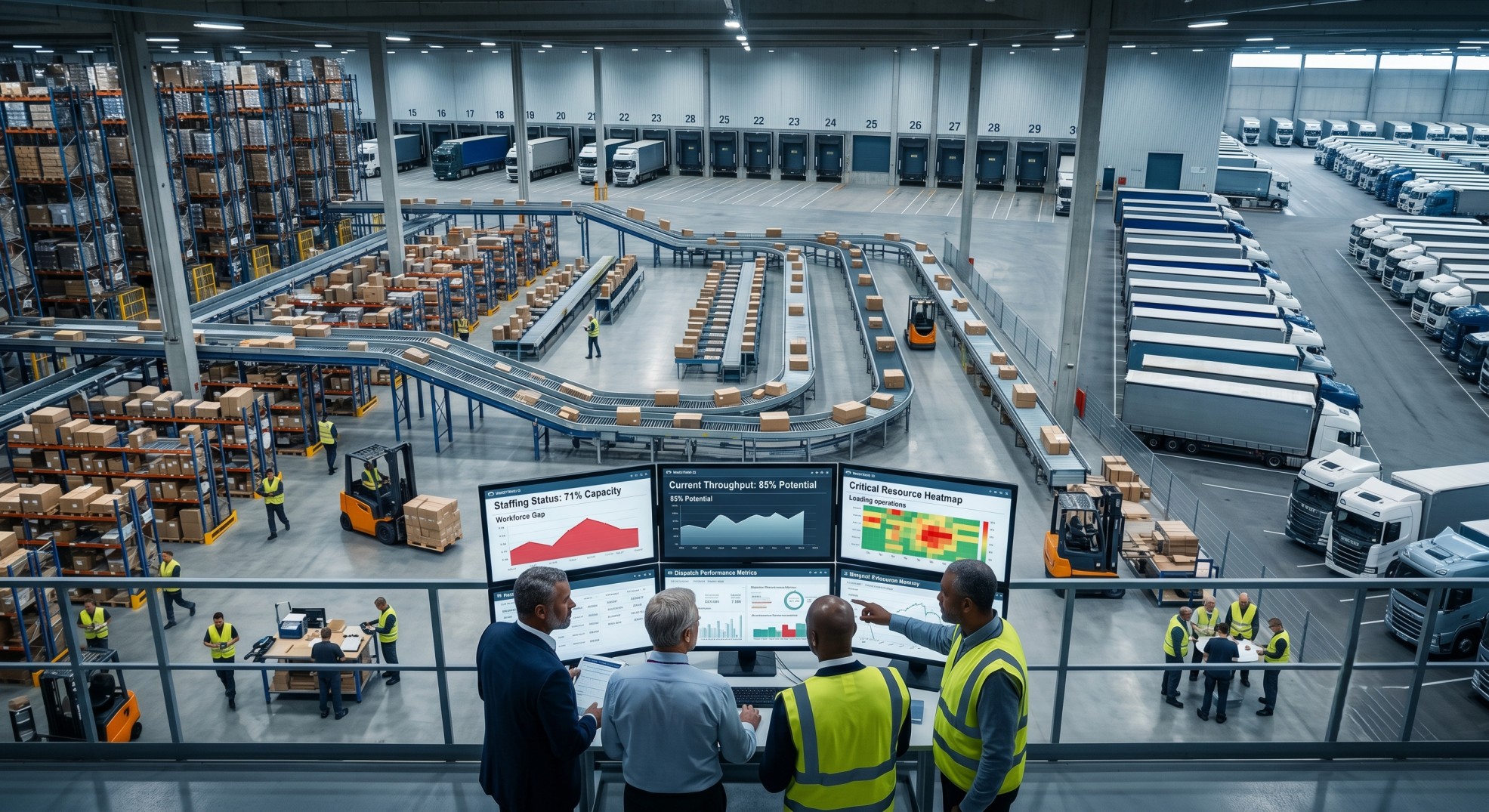
For the past decade, the blueprint for scaling a logistics enterprise seemed clear: invest heavily in infrastructure, acquire advanced transport assets, and implement cutting-edge warehouse automation.
The industry poured billions into larger fulfillment centers, expanded line-haul fleets, predictive telematics, transport management systems, and automated sorting technologies. The assumption was simple: infrastructure creates capacity, and capacity drives growth.
But as the logistics market moves through 2026, operational leaders across Romania, Slovakia, Poland, and the wider Central and Eastern European (CEE) region are confronting a very different reality.
The true bottleneck to scaling a logistics operation is no longer physical infrastructure or capital allocation.
It is workforce scalability.
A company can build a 50,000-square-meter distribution hub or procure 100 new heavy trucks, but if it cannot scale the human execution layer — the drivers on the road, forklift operators in the warehouse, and operational personnel supporting daily throughput — those multi-million-euro investments quickly become underutilized assets.
The Capital Paradox: Why Idle Assets Are Becoming More Expensive
In executive boardrooms, infrastructure expansion is often viewed as a sign of growth and market strength.
But on the operational floor, the reality can look very different.
When workforce capacity fails to scale alongside infrastructure investments, a compounding ripple effect begins impacting profitability, execution consistency, and operational efficiency.
The Warehouse Bottleneck
Modern Warehouse Management Systems (WMS), automated conveyor networks, and advanced fulfillment technologies are designed to maximize throughput and operational velocity.
But when facilities run short on forklift operators, warehouse personnel, or cross-dock staff during peak execution periods, technology alone cannot compensate.
The result:
- Yard congestion increases
- Throughput slows
- Delivery schedules become inconsistent
- Operational pressure escalates across the supply chain
The infrastructure exists — but the execution capacity behind it becomes unstable.
The Fleet Utilization Gap
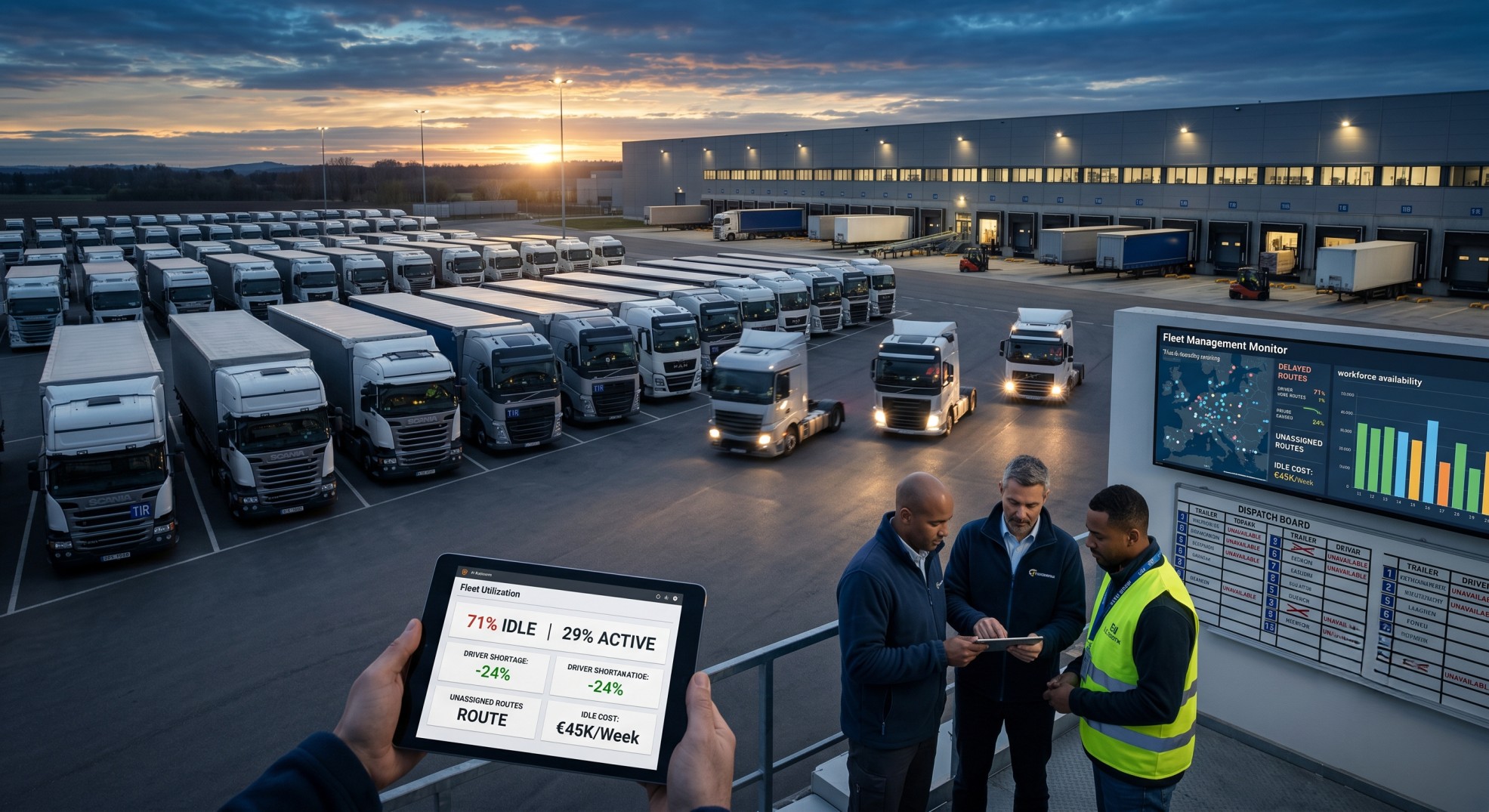
Transport operators across Europe continue investing heavily in newer fleets and expanded trailer capacity.
However, fleet expansion also brings substantial fixed operational costs:
- Vehicle financing
- Leasing commitments
- Insurance premiums
- Maintenance overheads
- Regulatory compliance expenses
When fleets cannot maintain stable driver coverage due to transport workforce shortages, localized labor constraints, or high turnover, asset utilization quickly declines.
A parked truck generates no revenue, yet continues accumulating fixed operational costs every day.
This challenge is becoming increasingly visible across European logistics corridors where fleet availability and driver continuity are no longer scaling at the same pace.
The Premium Sub-Contracting Trap
To protect strict client SLAs and delivery commitments, many logistics companies are increasingly forced into reactive operational planning.
When workforce gaps emerge unexpectedly, operators often rely on:
- Emergency subcontracting
- Spot-market carriers
- Temporary staffing support
- Premium last-minute transport solutions
While these approaches may temporarily protect service continuity, they also significantly increase operational costs and reduce long-term scalability.
Shifting from Local Manpower to Scalable Workforce Ecosystems
Traditional recruitment models were built for a localized labor market that no longer exists.
Relying on reactive regional job postings, localized wage competition, and short-term staffing solutions is becoming increasingly difficult to sustain in many logistics markets across Europe.
When a 3PL or transport company treats workforce capacity as a reactive backup plan rather than a core strategic asset, its entire operational scaling strategy becomes vulnerable to constant labor shocks and workforce instability.
Forward-thinking logistics enterprises are changing their approach.
They are beginning to apply the same strategic rigor to workforce planning that they apply to capital expenditures, fleet investments, and infrastructure expansion — transitioning from purely reactive local hiring toward more diversified and scalable workforce ecosystems.
| Operational Lever | The Asset-Heavy Reactive Strategy | The Scalable Workforce Strategy |
| Growth Blueprint | Expand warehouse footprints and fleet sizes; recruit locally when shortages hit. | Synchronize infrastructure investments with dedicated, long-term workforce planning. |
| Risk Management | Absorb turnover costs, carrier penalties, and premium spot-market expenses. | Improve operational resilience through more stable workforce continuity models. |
| Operational Execution | Run shifts understaffed and accept reduced asset utilization. | Improve operational continuity and reduce workforce disruption through structured, long-term staffing models. |
Why Automation Alone Cannot Solve the Problem
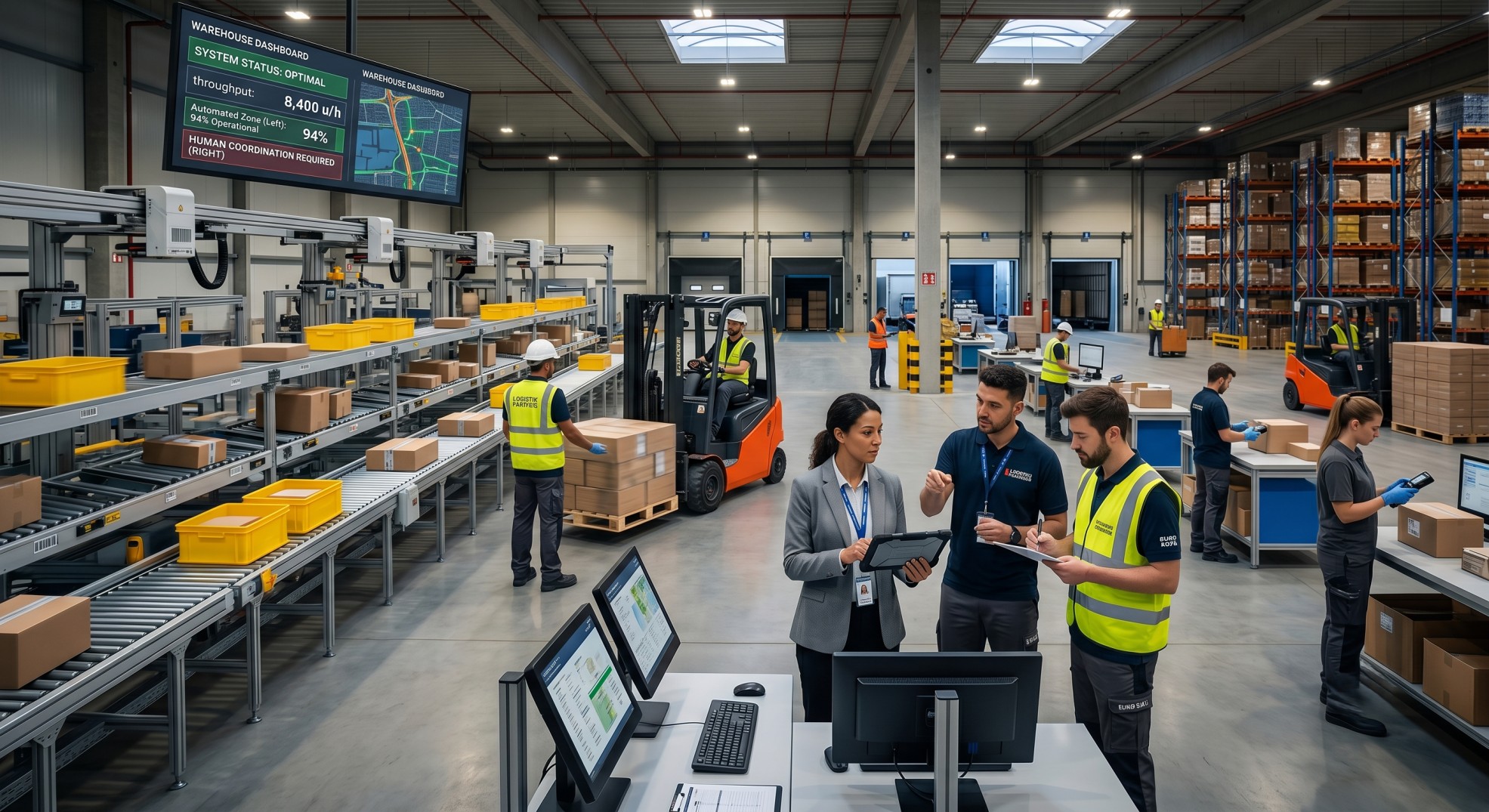
The logistics sector has never had access to more sophisticated technology.
Today, operators can:
- Track freight movement in real time
- Monitor fleet telematics instantly
- Optimize warehouse throughput digitally
- Forecast route efficiency using advanced analytics
But technology and infrastructure are ultimately operational multipliers.
If the underlying human capital foundation remains unstable, technology simply multiplies operational instability.
Even highly automated logistics environments still depend heavily on people for:
- Driving
- Loading
- Safety compliance
- Equipment handling
- Warehouse coordination
- Customer delivery execution
As supply chains become faster and more demanding, workforce continuity is increasingly becoming one of the most important drivers of operational resilience.
Across Europe, logistics workforce shortages are increasingly affecting warehouse staffing, transport operations, fleet utilization, and supply chain execution. As infrastructure investments continue accelerating, companies are realizing that long-term workforce scalability may become one of the defining operational challenges of the decade.
Workforce Stability Is Becoming the Ultimate Competitive Advantage
As delivery windows shrink and operational pressure rises across CEE supply chain corridors, the logistics market is gradually dividing into two groups:
- Companies constantly reacting to workforce disruptions and operational bottlenecks
- Companies building stable, scalable execution capacity through long-term workforce planning
Future market leadership may not belong solely to the companies with:
- The largest warehouses
- The newest fleets
- The most advanced systems
It may increasingly belong to the operators capable of maintaining stable operational execution behind those assets every single day.
Because in modern logistics, infrastructure creates potential — but workforce scalability determines whether that potential can actually be executed consistently.
Final Thoughts
Across Europe’s logistics and transport sector, workforce stability is evolving from an HR challenge into a core operational strategy.
As operational pressure, customer expectations, and infrastructure investments continue increasing, logistics companies must begin viewing workforce scalability as a critical component of sustainable growth.
The operators that successfully align infrastructure expansion with long-term workforce continuity may ultimately be the ones best positioned to:
- Protect operational resilience
- Improve asset utilization
- Maintain delivery consistency
- Scale sustainably in increasingly competitive logistics markets
At Orbit EU, we support logistics companies, transport operators, and warehouse operations across Europe by helping them build structured international workforce pipelines that support more stable long-term operational execution and workforce continuity.
Schedule a brief operational discussion with our team to explore workforce scalability strategies for your logistics operation.